


1. What is the difference between Value Analysis and Value Management?
Value Analysis is one of the most successful methods for systematically optimising costs and increasing the value of products, processes and services. It originated after the Second World War: in the 1950s, the American L. D. Miles developed a structured approach to reducing manufacturing costs while safeguarding the function and quality of products.[1] In Germany, this methodology became known as Wertanalyse (WA) and still forms the basis for many further developments in modern Value Management.
With increasing globalisation and new economic conditions, the original Value Analysis was developed further into a comprehensive, strategically oriented methodology: Value Management. Whereas classic Value Analysis focuses primarily on the product and cost level, Value Management takes a holistic, company-wide approach to increasing benefit and achieving a lasting value orientation.
In practice, this development often leads to misunderstandings and problems of delimitation between the terms. Many companies assume that
- Value Management is merely the English translation of Wertanalyse, or
- Value Management has completely replaced Value Analysis.
However, neither assumption is correct. Rather, Value Analysis and Value Management are closely related methodologically. Whereas Value Analysis describes the operational implementation of function and cost optimisation, Value Management integrates this way of thinking into the overarching corporate strategy.
Terms such as Value Analysis and Value Engineering are often used as well and have caused further confusion in German-speaking countries. There is a lack of a clear account of their relationship to Wertanalyse.
However, it is not only the precise distinction between Value Analysis and Value Management, but also the content of both methodologies that raises questions in many companies. In surveys, a large number of companies support the use of Value Analysis or Value Management. A closer look at how the two methods are systematically implemented, however, reveals that very different content and approaches are meant.[2]
The issues already described and the ongoing developments in corporate value creation make clear how important it is to draw a precise distinction between the various terms and methods of Value Analysis – as the basis for sustainable, value-oriented corporate management.
2. History of Value Analysis
The following briefly outlines the development of Value Analysis in its country of origin, the USA, and in Germany. For the sake of clarity, further historical, cross-border developments have been omitted.
2.1 The Development of Value Analysis in the USA
In 1947, L. D. Miles, a design engineer at General Electric, was commissioned in the USA to develop a method that would take account of the economic constraints prevailing at the time.[3] Owing to the shortage of materials after the Second World War, companies were forced to switch to substitute materials.[4] In this context, it was found that the products became cheaper and in some cases even better. Miles was then asked to develop a systematic approach that would specifically drive lower-cost and better product design and identify and reduce avoidable costs. The aim was to enable a product to deliver the same performance at lower cost.[5] By 1951, Miles and his colleagues had thus developed Value Analysis as a methodology for cost reduction and value improvement. “Value Analysis” originally describes the necessary process of analysing value and costs. “Value Engineering”, by contrast, is the process of designing value and costs. Value Engineering therefore also includes supporting products with the Value Analysis approach from the start of development. Although “Value Analysis” is the correct literal translation of the German term “Wertanalyse”, “Value Engineering” is the more accurate translation in terms of content. Today, modern Value Analysis covers the entire life cycle of products.
Miles defines Value Analysis as “…a systematic creative method aimed at effectively identifying unnecessary costs at the product development stage, between trade-fair samples and production, or in standard products from ongoing production, i.e. costs that contribute neither to quality, utility, service life or external appearance, nor to other characteristics desired by the customer”.[6] Even when Value Analysis first emerged, the basic elements of interdisciplinarity, teamwork, the function concept, and analysis and idea generation techniques were combined in a systematic Value Analysis Work Plan.[7] Taken individually, these basic elements were not new. What was new was the holistic way of working, whose original work plan was
- orientation,
- information,
- speculation,
- analysis,
- programme planning,
- programme execution and
- summary and conclusion.
Miles already justified it with the words “The advantages for time management, the management of staff and the function-oriented way of thinking speak in favour of a work plan.”[8]
Shortly after Value Analysis emerged, training courses were held, first at General Electric and eventually beyond the company's own boundaries.[9] Awareness within the USA grew very quickly. This rapid development was supported by the use of Value Analysis elements by the US Navy and subsequently by other US government departments. Over time, various institutions were founded to further promote the spread of Value Analysis and to provide a point of contact for interested parties.[10]
2.2 The Development of Value Analysis in Germany
Value Analysis has been discussed in Germany since the end of the 1950s. However, the methodology was applied in Germany for different reasons than in the USA. The background was not a shortage of materials, but the first industrial recession after the Second World War in the 1960s. With the collapse in demand for industrial and consumer goods, many companies recognised that long-term business success could only be achieved by taking part in international competition. On the basis of successful business examples from other countries, Value Analysis was introduced in German companies as a methodology for restoring competitiveness.[11] Publications on Value Analysis have appeared in the German literature since 1957, with the number of contributions rising rapidly from the 1960s onwards. Among these publications, the German translation, published in 1964, of the work “Technique of Value Analysis and Engineering”[12] written by Miles in 1961 set the direction. In it, Miles brought together his ideas and experience of Value Analysis for the first time.[13] With the involvement of the Verein Deutscher Ingenieure (VDI, Association of German Engineers) and other Value Analysis experts, Value Analysis was promoted further and its content precisely defined in a guideline.
Over the years, Value Analysis has continued to evolve. Figure 1 shows the development from the beginnings of Value Analysis to the state reached in 2010.
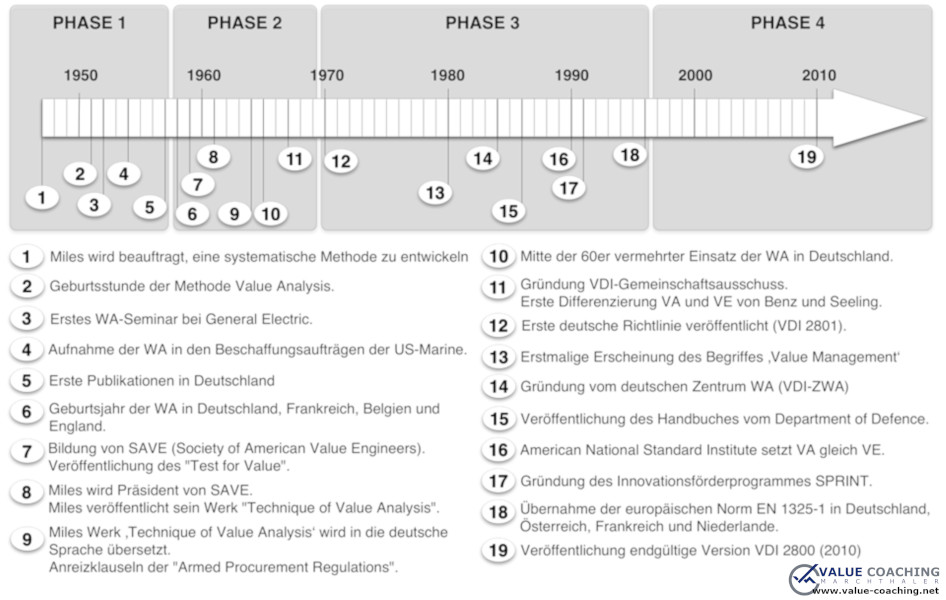
Figure 1 – History of Value Analysis and Value Management
Figure 1 also shows the development from “classic Value Analysis” to “modern Value Analysis” between 1947 and the mid-1980s. The historical development is well suited to highlighting the differences. For a considerable time, classic Value Analysis focused mainly on cost reduction and value improvement of existing products. In new product development, Value Analysis played at best a supporting role, but not a guiding one.
From today's perspective, the concept of the product was also limited. With the classic Value Analysis object, the focus was on the physical product rather than on services and processes.
The success of classic Value Analysis was based, among other things, on the fact that from the outset developers' attention was directed away from components, shape, properties and material towards functions and value. This is a distinctive characteristic of classic Value Analysis that still holds today.[14] In principle, classic Value Analysis can also be understood as cost analysis. A product contains several functions. These functions can be realised in different ways and therefore at different costs. The aim of cost analysis is to investigate whether the product-specific functions can be achieved or implemented at lower cost without disadvantages. This also applies to make-or-buy decisions. Instead of buying in the cheapest parts, “…the function is procured at its lowest manufacturing costs.” [15] Moreover, it is not the individual prices of products that are considered, but the total costs of a company.
3. Modern Value Analysis
Modern Value Analysis is characterised not only by its guiding role in new product development and by the extension of Value Analysis objects to software, services and processes. It is also the greater involvement of the market and the customer that distinguishes it from classic Value Analysis and brings the developer closer to marketing. The developer also moves closer to business administration and controlling through the optimisation of internal control processes and logistics procedures.
After a basic outline of these relationships, the points at which TRIZ can provide support will also be described.
3.1 Fundamentals
The current VDI 2800 guideline defines Value Analysis as an “organised and creative approach that uses a function-oriented and economic design process with the aim of increasing the value of a Value Analysis object”.[16] DIN EN 1325-1 further addresses the organised and creative nature of Value Analysis, which can be used to solve complex tasks. In a function-oriented and economic design process, the value of a so-called Value Analysis object can thus be increased in a targeted manner. Consequently, there has been a shift away from the sole objective of reducing the manufacturing costs of products towards a focus on increasing the value of the company.[17] The emphasis is no longer solely on products as Value Analysis objects, as Miles still presented in the original version of Value Analysis. Today, services, means of production and
production processes, organisational and administrative procedures, as well as information content and
information processes are also considered.[18] Value Analysis is therefore a holistic approach that takes into account the interests and constraints of all areas concerned and of the wider environment.[19] The strengths of Value Analysis come into their own particularly when the problems to be addressed are interdisciplinary and interconnected.
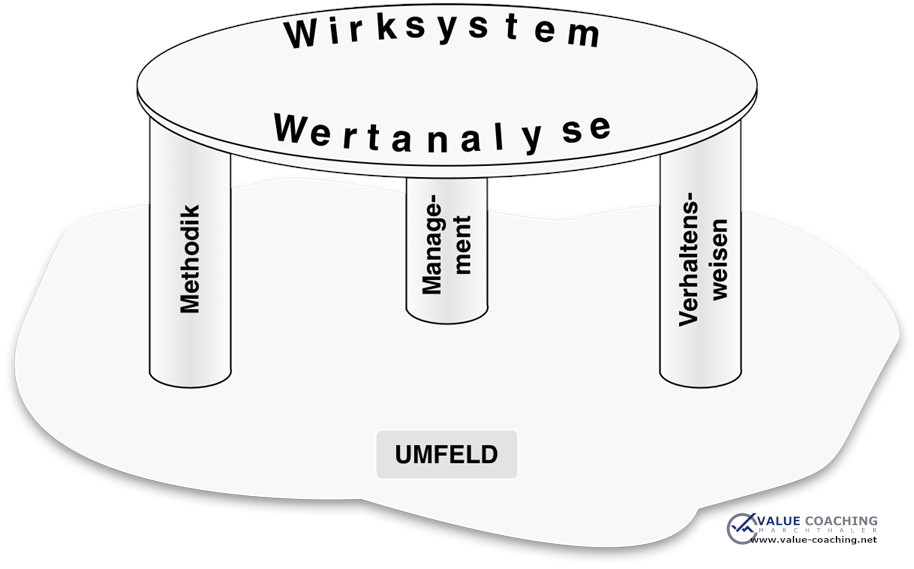
Figure 2 – System elements of Value Analysis
In general, Value Analysis rests on the three pillars shown in Figure 2. For Value Analysis to be carried out systematically and correctly in a company, the business environment and compliance with certain rules play a decisive role.
The main component of the first pillar, “Methodology”, is the correct and efficient implementation of the Value Analysis Work Plan.[20] It enables a systematic, organised and participative approach.[21] The exact procedure and content of the work plan are discussed later. The basic rules of this pillar include that
- cross-functional teams are deployed,
- the market- and customer-oriented general objectives are formulated precisely,
- the functions relating to the object are identified in a targeted way,
- the search for solutions is function-oriented,
- the creative phase and the evaluation phase are kept strictly separate,
- the proposed solutions are evaluated holistically, and
- the selected solution is regarded as a product or process of increased value.
The second pillar, “Behaviour”, covers the rules for human behaviour during the Value Analysis project, as this has a decisive influence on the success of the methodology. The people involved should be able to
- recognise, describe and present problems,
- behave cooperatively,
- take in and pass on information,
- accept the unfamiliar, and
- constantly question the status quo.
In addition, the people involved should be able to change or coordinate their personal traits in a way that benefits successful teamwork. Egoism and constant criticism do not serve the good of a team.[22]
The third pillar, “Management”, covers
- the introduction of Value Analysis,
- ensuring continuing education in Value Analysis, and
- the selection of Value Analysis objects.
It should be noted, however, that applying Value Analysis does not guarantee success. What matters is that Value Analysis can steer the abilities and knowledge of the people involved in the right direction. For this reason, continuous training and professional development for all employees is a decisive factor for Value Analysis in companies. With a value-oriented organisation, specialist knowledge, methodological knowledge of how to conduct Value Analysis, and experience in analysis, methods and behaviour, Value Analysis can be carried out successfully.[23]
The Value Analysis Work Plan is one of the decisive organisational elements of Value Analysis. Until 2006, the six-step work plan was set out in guideline VDI 2800 (2000) and was widely used in Germany. In 2006, it was expanded to ten steps and is currently known as the VDI 2800 (2010) work plan. The “new” work plan is characterised by a more strategic orientation, a more precise, comprehensive and detailed description, and applicability to a wider range of objects. It also takes a more market-oriented perspective than the older work plan.[24] Figure 3 shows the VDI 2800 (2010) work plan.
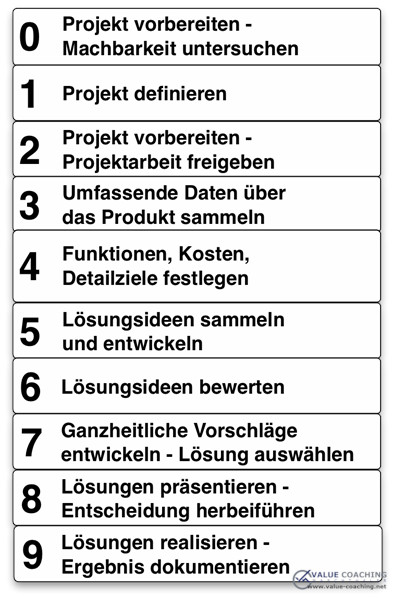
Figure 3 - Value Analysis Work Plan according to VDI 2800 (2010)
The phases “Prepare the project – investigate feasibility”, “Define the project”, “Prepare the project – release project work” and “Collect comprehensive data on the product” represent general project management activities. The fourth phase, “Define functions, costs and detailed objectives”, can be divided into “Describe the current situation” and “Define the target situation”. In general, this phase serves to detail and concretise the Value Analysis project. Function Analysis is used here as a key element. In a first step, Function Analysis is used to analyse the Value Analysis object precisely and to establish a shared view within the team. Further tools in this area are the function tree and Function Cost Analysis.
In the second step, defining the target situation of the object determines the objective and the elements on which development, improvement or optimisation should focus. In the phase “Collect and develop solution ideas”, creativity techniques are applied. In phase 6, “Evaluate solution ideas”, the ideas are compared and evaluated. In the last three phases, “Develop holistic proposals – select a solution”, “Present the solution – obtain a decision” and “Implement solutions – document the result”, the ideas are developed further, presented and implemented. It is important that the responsibility of the people involved only ends once the solution has been implemented. Iteration loops between the individual phases are permitted and indeed desirable in a Value Analysis project.
3.2 Function Analysis in Value Analysis
Function Analysis belongs to the fourth phase of the VDI 2800 (2010) Value Analysis Work Plan. In general, Function Analysis describes the effect, purpose and concept of Value Analysis objects. Revealing these effects is, in a sense, the goal of Function Analysis. In this way, the character and the benefit of the objects are identified and presented. This involves detaching from external characteristics and focusing on the elementary functions of the objects. The core of Function Analysis is naming the functions of an object. As a rule, an object performs many functions, which can be divided into basic and secondary functions according to their importance. Functions are generally expressed by a noun and a verb. The objectives of naming functions are[25]
- determining the functions of the products and services to be optimised,
- the relationship between the functions and the resulting costs,
- the creation of high-quality products, and
- the evaluation of alternative objects.
At first, describing an object in this way will seem unusual to an inexperienced user.[26] In principle, however, it is an excellent way of engaging intensively with the object in order to recognise its actual purpose. Moreover, an effect can be described with sufficient precision in two words. All team members name the problem in the same way, which prevents misunderstandings.[27] Since an object usually performs several functions that interact with one another, these functions must be structured. A number of tools make this structuring possible. In Value Analysis, the function tree and the FAST diagram deserve particular mention.[28]
3.2.1 Function Tree for Structuring Functions in Value Analysis
The function tree is used to structure the collected functions of the object in the fourth phase of the Value Analysis Work Plan. A function tree such as the one in Figure 4 can be read from both the left and the right.
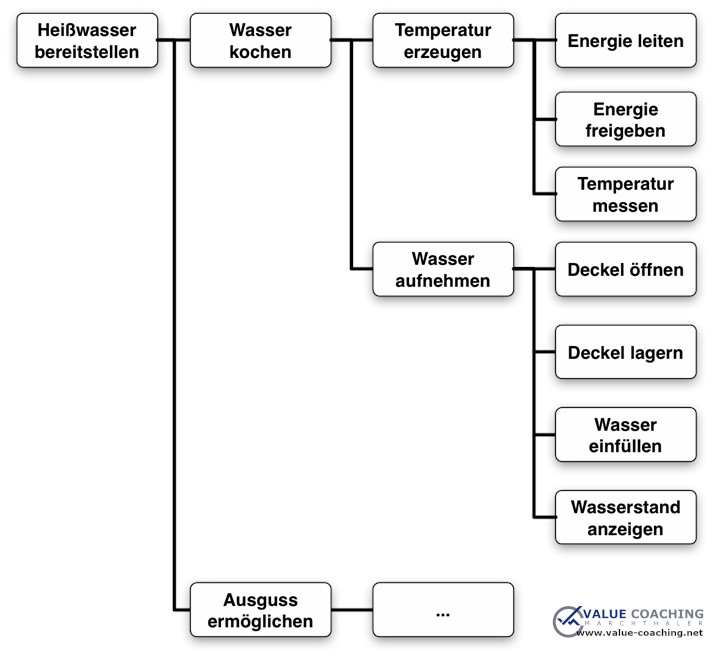
Figure 4 - Function tree of a kettle
If the analysis runs from left to right, the structure is examined by asking “How?”. In the opposite direction, the question is “Why?”. The function tree makes it clear to everyone involved how an object is structured in terms of its functions and how it can be optimised.[29] Function trees are generally structured by hierarchy levels,[30] i.e. the overall function of the object is on the far left, the part functions are in the next column, followed by further part functions down to elementary functions.[31] Functions at a lower hierarchy level enable the realisation or performance of higher-level functions. In principle, the level of detail increases from left to right. It does not matter whether the lower hierarchy levels are arranged from left to right or from top to bottom. A mind map can also be a useful form of presentation. Each function tree has only one overall function. A function tree should contain both desired and unwanted functions, particularly when it is used to analyse the current state.
Figure 4 shows the function tree of a kettle. The overall function of the appliance is “provide hot water”, and the further part functions ensure that this overall function can be realised. Analysing from left to right asks how “hot water is generated”. The answer is: by boiling water and allowing it to be poured. The opposite direction of analysis asks why something happens. A lid is opened and supported, water is filled in and the water level is indicated in order to take in water.
3.2.2 Function Costs
In a further step of the fourth phase of the Value Analysis Work Plan, the component-related manufacturing costs are allocated directly to the functions of the object. This is known as a Function Cost Analysis. Function costs are “the shares of the costs of a function carrier allocated to a function, where function carriers are understood to be entities that realise functions.”[32] The function costs of an object are the sum of all individual function costs across the hierarchy levels. Function costs can be determined for existing objects or estimated for new developments. A Function Cost Analysis shows how much it costs in production to realise the functions or characteristics of an object.
3.2.3 Function Potential Analysis
Function Potential Analysis aims to filter out, from a large number of functions, those best suited to cost optimisation.[33] To do this, the importance of these functions to the customer is determined first. Tools such as Quality Function Deployment can be used to identify their customer-specific importance. Comparing the costs and the importance of the functions makes it possible to derive recommendations for action. If the costs of a function are too high in relation to its importance, it is a cost-driving function and the effort should be reduced.[34] If the costs of a function are too low in relation to its importance, it is a function with potential: additional customer value could be created with comparatively modest means. These comparisons can be presented either in a portfolio diagram[35] or as a bar chart, as in Figure 5, which lists some of the functions of the kettle. The function “generate temperature” is an example of a function whose cost of fulfilment is higher than its importance to the customer. This difference indicates to the manufacturer that the effort should be reduced. The function “take in water” is the opposite case: here, its importance to the customer is higher than the effort. More development work should be invested here in order to meet customer needs more effectively.
When selecting the evaluation criteria for the importance of the functions, the quality of the function evaluation is important, and the following questions must be asked:
- what effort is acceptable for carrying out the evaluation,
- what competence the evaluators have with regard to the functions being evaluated,
- whether the functions should be evaluated externally or internally at all, and
- whether adequate confidentiality can be ensured at all in an external evaluation.
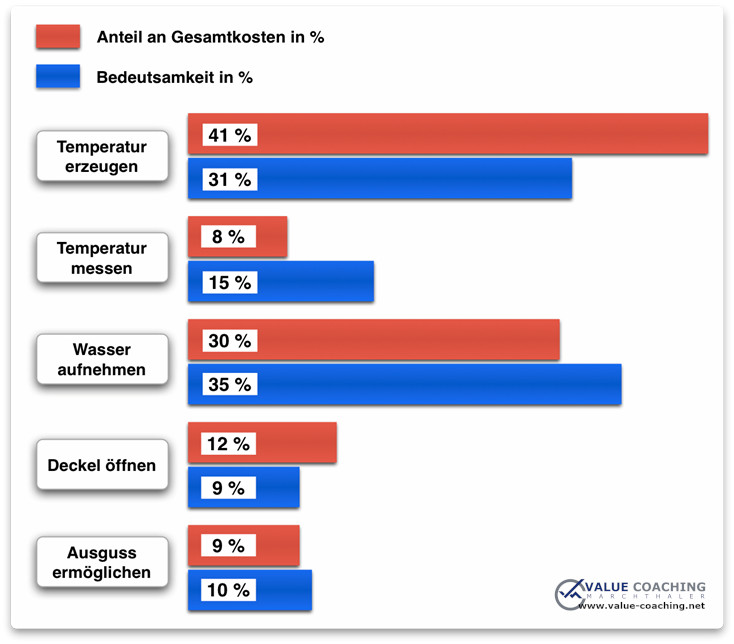
Figure 5 - Function Potential Analysis of a kettle
When determining the effort, costs and time aspects in particular play a role. The suitability of the evaluators can be seen in their ability to relate to the target groups concerned, their methodological knowledge and their ability to think differently. Evaluations can be carried out internally or externally. In an external evaluation, however, care should be taken, e.g. to ensure that confidentiality obligations are observed and that the external evaluators have the necessary technical expertise.
Function evaluation usually relies on the “simple paired comparison” or “differentiated paired comparison” tool, or on the House of Quality (QFD). These tools make it easy to avoid the disagreements within a team that can arise when evaluations are carried out through discussion.
Function Cost Analysis comprises four steps:
- selecting the functions to be evaluated,
- calculating the manufacturing costs of the components,
- allocating function shares to the components, and
- calculating the share of each function in the total costs.
Ideally, the functions should be selected on the basis of the function structure used. Depending on the desired level of detail, the functions are selected along a function branch, i.e. at different hierarchy levels, and the costs are allocated accordingly. The selected functions are then allocated proportionally to the components of the Value Analysis object. The question is whether, and to what extent, the component under consideration contributes to performing the function in question. The function costs are therefore determined by apportioning the assembly costs to these functions.[36]
3.3 The Creativity, Evaluation and Development Phases
The fifth phase, “Collect and develop solution ideas”, is the Creativity Phase. Within the team, various creativity techniques are used to develop alternative solutions for the individual functions. The choice of tools depends on the abilities of the team and the situation within it.
In the sixth phase, “Evaluate solution ideas”, the collected solution ideas are evaluated in several stages and developed and refined between the evaluation stages. This reduces the large number of ideas to a manageable number and makes them more concrete. The process runs through several evaluation stages, so that only a few ideas remain at the end.
In the seventh phase, “Develop holistic proposals – select a solution”, and the eighth phase, “Present solutions – obtain a decision”, these ideas are developed into holistic proposals and presented to the relevant decision-makers. To ensure that the solutions developed are also implemented correctly in the ninth phase, “Implement solutions – document the result”, the Value Analysis team remains in place until implementation is complete.[37]
3.4 TRIZ as a Supporting Tool
Alternatively, some TRIZ tools can also be used within the phases of the VDI 2800 (2010) Value Analysis Work Plan.
The Theory of Inventive Problem Solving (TRIZ) is a methodology whose tools can be used at several points in the VDI 2800 (2010) Value Analysis Work Plan.
In phase 3 of the Value Analysis Work Plan, information on the Value Analysis object is collected. TRIZ tools can be assigned to this part of the current-state analysis. TRIZ methods for technology forecasting and assessment are suitable here for carrying out a technology foresight and potential assessment.
In phase 4 of the work plan, functions, costs and detailed objectives are defined. Among other things, this phase uses the analysis of the current state to define the target state. TRIZ’s situation-specific function modelling and its linking of problem formulations can complement the Value Analysis toolbox here. TRIZ function formulation does not differ from that of Value Analysis in its concept of function, but only in the additional cause-and-effect information it provides. Compared with the function tree or the FAST diagram, TRIZ function modelling is particularly strong in problem formulation because it reveals contradictions. Another option is to use the innovation checklist to formulate and analyse problems. This can be used on its own or in combination with TRIZ function modelling.
In the creative phase 5, various TRIZ tools can be used for idea generation. These include the laws of technical system evolution and the contradiction matrix, which complement the typical Value Analysis ideation techniques ideally.
In phase 7, in which holistic solution proposals are to be developed, the TRIZ tool “Anticipatory Failure Determination” can be used instead of FMEA to identify possible failures in advance.[38]
4. Value Management
Value Management is a methodology that evolved from Value Analysis. Apart from its additional tools, Value Management is characterised mainly by its field of application. If the perspective of product and process development is extended to a holistic view of the company, elements of Value Analysis can also be applied to operational and strategic management decisions. A subset of these activities and tools for specific management tasks is today also referred to as “value-oriented corporate management”. The description of the methods is intended to make the differences from Value Analysis clear.
4.1 Fundamentals
Value Analysis evolved from a cost reduction method into a problem-solving system, “Value Management”. Value Management is defined as “…a style of management particularly dedicated to mobilising people, developing skills and promoting synergies and innovation, with the aim of maximising the overall performance of an organisation.”[39] The aim of Value Management is to create a holistic and universally applicable system that can be used to solve all of a company’s problem areas.[40] Value Management is intended to support a company in the long term in making the greatest possible progress towards its defined business objectives with minimal use of resources. Management objectives are taken into account holistically, positive human dynamics are supported, and internal and external environmental conditions are considered. Three principles deserve particular emphasis in this context:[41]
- constant awareness of the importance of value to an organisation,
- a focus on objectives and targets before the search for solutions begins, and
- promoting innovative and practicable results through cross-functional functional thinking.
Value Management is a value-oriented strategy that supports the identification and exploitation of innovative potential in products and processes.[42] It should be implemented holistically at all hierarchy levels within the company and is particularly beneficial for overarching, cross-functional projects. In principle, this holistic management style can be applied in all sectors of the economy and public administration to products, services, workflows, processes, organisational structures and business strategies.[43]
A reference to a company-specific concept of value is particularly important for Value Management.[44] “Value” is the ratio of the “fulfilment of needs” to the “resources used” to achieve it. It therefore increases with reduced use of resources and/or greater fulfilment of needs. It should always be at the centre of business interests. However, value cannot be regarded as absolute, because different people from different areas always weight value differently. In addition, the definition of needs is highly user-specific, which makes quantifying them very uncertain. The use of resources, on the other hand, is easier to determine. The pillars of Value Analysis have been developed further and form the basis for the characteristic elements of Value Management:
- management style,
- positive human dynamics,
- consideration of external and internal environmental factors, and
- effective use of methods and tools,
which are considered together, even though they are not linked with one another in any other management style.[45] The Value Management style combines several essential characteristics to support the application of the value- and function-oriented concept. In addition to promoting teamwork and communication, it essentially emphasises the function-oriented approach. The focus is not on how the object is represented, but on its effects. Alongside this function-oriented approach, the aim is to create an atmosphere that encourages creativity and innovation, and a customer-oriented focus. As in Value Analysis, possible alternative solutions should be evaluated quantitatively so that they can be compared as objectively and correctly as possible.[46] The tasks of the “management style” element are selecting[47]
- the Value Management objectives,
- the target indicators,
- the projects,
- the team facilitators and/or coordinators, and scheduling
- training and professional development.
Besides management style, the effective use of methods and tools also deserves emphasis. These methods and tools help to achieve the desired results. For this reason, these elements are discussed separately in the following subsection.
4.2 The Value Management Portfolio
Value Management comprises a range of tools and methods. The most important and most frequently used tool is Value Analysis. For this reason, Figure 6 shows Value Analysis at the centre.
This central position underlines that the Value Analysis Work Plan is also used in Value Management. The essential elements of Value Analysis –
- functional thinking,
- creativity,
- interdisciplinarity and
- Teamwork
– also form the basic elements of Value Management.[48] The tools and methods in the outer ring of the portfolio can be divided into the categories “methodical strategic planning”, “methodical quality assurance”, “project planning methods”, “cost management methods”, “logistics methods”, “methodical design” and “organisational development methods”. In general, Figure 6 shows that the closer the tools are to the centre, the more they address the operational level, while those further out relate more to strategic orientation.
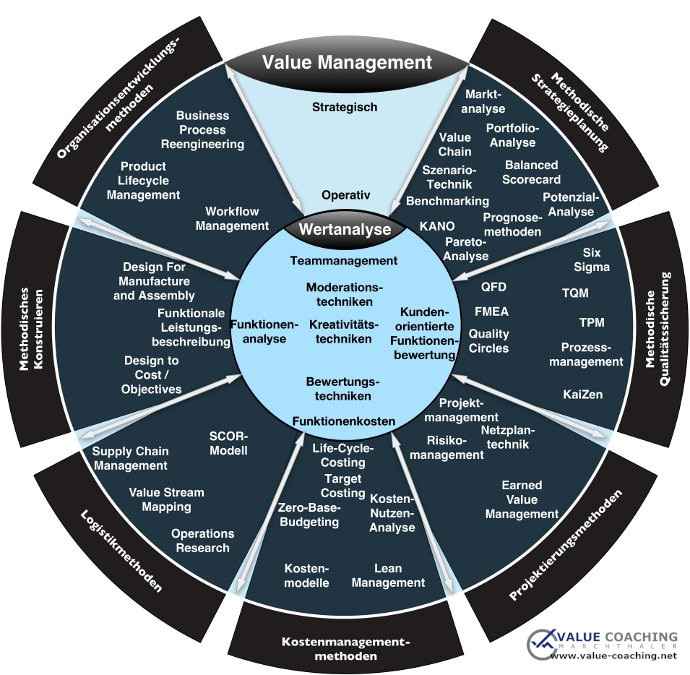
Figure 6 - Value Management methods portfolio
4.3 Value-Oriented Corporate Management
Companies often face a situation in which
- organisational units are highly fragmented,
- individual departments are highly specialised,
- cross-functional knowledge of the business is required but usually lacking, and
- overarching management tasks are not solved across departments.
Traditionally, a company is managed using key figures from the balance sheet or the profit and loss account. This approach identifies problematic areas of the business, and measures to improve these problem areas are derived from it. As a rule, these improvement measures are implemented department by department. In the following period, progress towards the objectives is checked by recalculating the key figures. Often, however, individual measures that are not coordinated across the company lead to poor results. Problems are, for example, merely shifted to other business units, so that the company’s overall result may even deteriorate. What is needed, therefore, is a tool that takes into account both the “hard” financial factors and the “soft” people- and process-related factors.[49] Value-oriented corporate management meets these requirements. This methodology applies the fundamental pillars of Value Analysis at management level. Instead of the limited perspective of a single person responsible, it relies on interdisciplinarity. The overarching objective of value-oriented corporate management is to increase the value of the company sustainably.[50] This is achieved through the control loop shown in Figure 7, in which the departments shown are examples only. They can vary depending on the task.
First, meaningful key figures are defined in a balance sheet analysis, through which all problem areas are identified. The subsequent sensitivity analysis prioritises the necessary measures. The aim is to achieve maximum success with minimum effort. Since this involves more than individual departments, this step and the further procedure must be carried out by a cross-functional team.
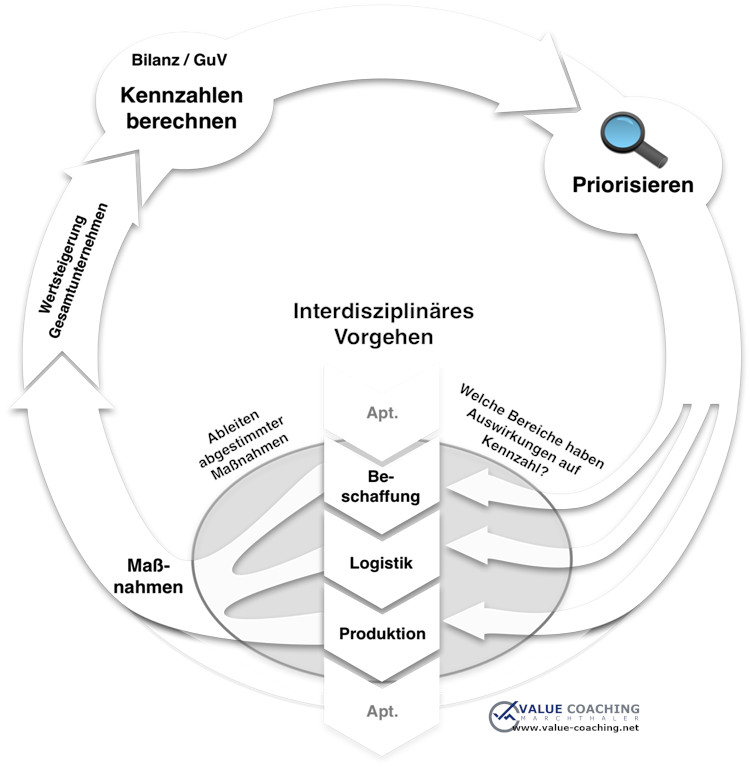
Figure 7 – Control loop of value-oriented corporate management
This approach makes it possible to identify the most important business levers, known as value drivers. The necessary measures are defined across departments, and the corresponding projects are derived from them. This ensures that departmental self-interest or isolated measures do not jeopardise a sustainably good result, and that the company is viewed as an organic overall system.
The term value induction (Wertinduzierung) is used for the application of Value Management at strategic level. It links the organisation-specific definition of value with strategic objectives, functions and value drivers.
5. Summary and differentiation
Since classic Value Analysis was developed in 1947, primarily with a focus on reducing the manufacturing costs of products, a number of changes and further developments have taken place. With regard to classic Value Analysis, reference should be made to cost analysis, which is concerned with realising functions cost-effectively without accepting technical or quality disadvantages. With its focus on a functional perspective, a systematic approach based on a work plan, cross-functional teamwork and the objective of increasing company value, “modern” Value Analysis has emerged as a further development. This “modern” Value Analysis is characterised by an operational perspective. It was subsequently developed further into Value Management. This holistic, cross-functional strategy is characterised by a large number of usable
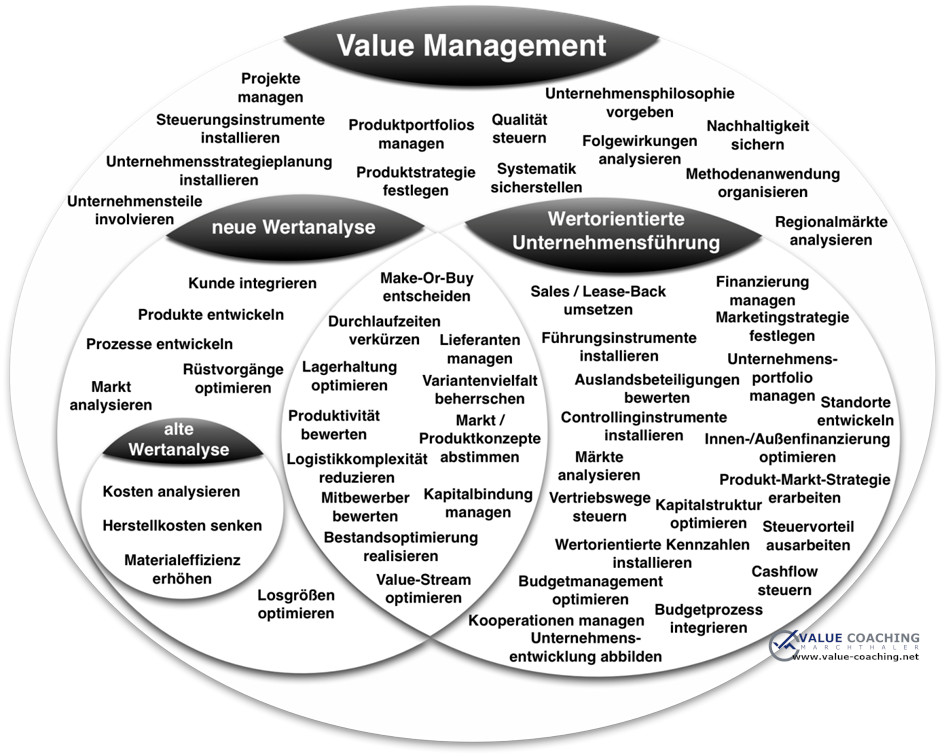
Figure 8 - Differentiation between Value Management, value-oriented corporate management and Value Analysis
methods and tools and by a strategic perspective. Value Analysis, with its associated work plan, remains the most important tool. Value-oriented corporate management was developed on the basis of Value Management. Its distinctive features are its orientation towards controlling key figures and systematic, cross-functional teamwork. In principle, value-oriented corporate management belongs at the strategic
level of Value Management.
Figure 8 outlines the differentiation between classic and modern Value Analysis, Value Management and value-oriented corporate management. The functional formulation roughly outlines the objectives of these methods. As the overarching methodology, Value Management encompasses not only its own tools and areas of application but also those of the three subordinate methodologies.
The three pillars of Value Analysis remain valid throughout all the components described, from classic and modern Value Analysis to value-oriented corporate management and Value Management. They form the basis for all value-oriented activities.
Modern Value Analysis continues to be the cross-functional design of products and processes at operational level. Value-oriented corporate management uses the same principles to solve operational and strategic challenges at management level. It is the cross-functional identification of overarching opportunities for value improvement. Value Analysis projects are derived from this identification of the need for action.
Value Management provides the framework for the value-oriented alignment of the company. It has the control instruments with which the activities of Value Analysis and value-oriented corporate management are coordinated. Based on the corporate philosophy, it ensures that strategic objectives are achieved sustainably.
Source: LOHE, R. ; MARCHTHALER, J. ; MERTEN, St. ; WIGGER, T.: Kostenanalyse, Wertanalyse, Value Management und Wertorientierte Unternehmensführung. In: LINGOHR, T. ; KRUSCHEL, M. (eds.): Best Practices im Value Management. Wiesbaden : Gabler, 2010.
References
Please note: The books and publications listed here are available in German only.
[Akiyama 1994] AKIYAMA, K.: Funktionenanalyse – Der Schlüssel zu erfolgreichen Produkten und Dienstleistungen. Verl. Moderne Industrie, Landsberg/Lech, 1994.
[Benz et al. 1967] BENZ, H.; SEELING, O.: Handbuch der Rationalisierung. Industrie-Verlag Carlheinz Gehlsen GmbH, Heidelberg, 1967.
[Bronner et al. 2006] BRONNER, A.; HERR, S.: Vereinfachte Wertanalyse –mit Formularen und CD-ROM. VDI. Springer, Berlin [et al.], 4th ed., 2006.
[Christmann 1973] CHRISTMANN, K.: Gewinnverbesserung durch Wertanalyse. Poeschel Verlag, Stuttgart, 1973.
[DIN EN 1325-1 1996] DIN EN 1325-1: Wertanalyse und Value Management. Deutsches Institut für Normung e. V., 1996.
[DIN EN 1325-2 2004] DIN EN 1325-2: Value Management, Wertanalyse, Funktionenanalyse Wörterbuch, Part 2: Value Management, Deutsches Institut für Normung e. V., 2004.
[EN 12973 2002] EN 12973 2002: Value Management. German version EN 12973: 2002 rev. Beuth-Verlag, Berlin, 2002.
[Götz 2007] GÖTZ, K.: Integrierte Produktentwicklung durch Value Management. Shaker Verlag, Aachen, 2007.
[Hoffmann 1979] HOFFMANN, H. J.: Wertanalyse – Ein Weg zur Erschließung neuer Rationalisierungsquellen. Ullstein Tb, Berlin, 1979.
[Hoffmann 1994] HOFFMANN, H. J.: Wertanalyse. Ullstein Verlag, Frankfurt, 1994.
[Kaufman et al. 2006] KAUFMAN, J. J.; WOODHEAD, R.: Stimulating innovation in products and services. John Wiley & Sons, Inc., Hoboken 2006.
[Jehle et al. 1996] JEHLE, E.; WILLKE, M.: Value Management und Kaizen als Instrumente des Kostenmanagements. KRP Kostenrechnungspraxis, 40(5):255-260, 1996.
[Jönsson 2008] JÖNSSON, S.: Ist „Value Management“ wertorientierte Unternehmensführung? In: VDI-Gesellschaft Systementwicklung und Projektgestaltung (ed.): Wertanalyse Praxis 2008. Düsseldorf: VDI Verlag, 2008.
[Kipper 1963] KIPPER, G.: Wertanalyse-Ein Weg zur Kostensenkung. Erich Schmidt Verlag, Berlin, 1963.
[Korte 1977] KORTE, R.-J.: Verfahren der Wertanalyse. Erich Schmidt Verlag, Berlin, 1st ed., 1977.
[Leitner 2006] LEITNER, W.: Value Management in virtuellen Organisationen . Virtuelle Teamarbeit am Beispiel der Wertanalyse. Shaker Verlag, Aachen, 2006.
[Lohe 2009] LOHE, R.: Vorlesungsskript Produktentwicklung 1: Methodik des Konstruierens (lecture notes). Siegen, 2009.
[Marchthaler et al. 2008a] MARCHTHALER, J.; LOHE, R.; SCHWENK, C.: Wertanalyse und Value Management. In: VDI-Gesellschaft Systementwicklung und Projektgestaltung (ed.): Wertanalyse Praxis 2008. Düsseldorf: VDI Verlag, 2008.
[Marchthaler et al. 2008b] MARCHTHALER, J.; WIGGER, T.; LOHE, R.: Innovatives Potenzial von Wertanalyse und Value Management. In: Maschinenbau – MB Revue 2008 Jahreshauptausgabe des Maschinenbau (2008).
[Marchthaler et al. 2009a] MARCHTHALER, J.; WIGGER, T.: Funktionen-Potenzial-Analyse. In: Spektrum der Produktentwicklung. WIS Verlag Siegen, Siegen, 2009.
[Marchthaler et al. 2009b] MARCHTHALER, J.; MONITOR, P.: Value Management auf Führungsebene Cash-Flow-Probleme nachhaltig lösen. In: VDI-Gesellschaft Systementwicklung und Projektgestaltung (ed.): Wertanalyse Praxis 2009. Düsseldorf: VDI Verlag, 2009.
[Merten 2010] MERTEN, S.: Strukturelle Zusammenstellung von Modellen zur Prognose und Bewertung von Technologien im Innovationsmanagement. Diploma thesis, University of Siegen, 2010.
[Miles 1964] MILES, L. D.: Value Engineering – Wertanalyse, die praktische Methode zur Kostensenkung. Verlag Moderne Industrie, Munich, 1964.
[Miles 1969] MILES, L. D.: Value Engineering. Verlag Moderne Industrie, Munich, 3rd ed., 1969.
[Pauwels 2001] PAUWELS, M.: Interkulturelle Produktentwicklung -Produktentwicklung mit Wertanalyse und interkultureller Kompetenz. Bericht aus dem Maschinenbau. Shaker Verlag, Aachen, 2001.
[Scharnbacher et al. 2003] SCHARNBACHER, K.; KIEFER, G.: Kundenzufriedenheit: Analyse, Messbarkeit und Zertifizierung. Management für Studium und Praxis. Oldenbourg, Munich, 3rd ed., 2003.
[Schulz et al. 2001] SCHULZ, K.; Taterra, P.: Wertorientierte Unternehmensführung. Seminar paper, Humboldt University of Berlin, 2001.
[VDI 2800 2010] VDI guideline: VDI 2800 – Wertanalyse Value Analysis. Beuth-Verlag, Berlin, 2010.
[Wigger et al. 2009] WIGGER, T.; MARCHTHALER, J.; LOHE, R.: Durch die Integration von Wertanalyse und TRIZ die Effizienz technischer Produkte steigern [Increasing the efficiency of technical products by integrating Value Analysis and TRIZ]. In: VDI-Gesellschaft Systementwicklung und Projektgestaltung (ed.): Wertanalyse Praxis 2009. Düsseldorf: VDI Verlag, 2009.
[Zentrum Wertanalyse 1995] ZENTRUM WERTANALYSE: Wertanalyse. VDI Verlag, Düsseldorf, 1995.
Frequently asked questions about Value Analysis and Value Management
What is the main difference between Value Analysis and Value Management?
Value Analysis is a specific project methodology. Value Management takes a broader view of value orientation and can also cover organisational and strategic questions.
When is a single Value Analysis project sufficient?
If you need to address a clearly defined technical or economic problem, a single project can be the right starting point.
When does Value Management become relevant for a company?
When project selection, qualification, methods, standards and value orientation are to be embedded in the company on a permanent basis, the question becomes broader.
How can Value Management be introduced in a company?
One possible starting point is a combination of qualification, a pilot project, building internal expertise and subsequently embedding the approach in the organisation.
Further reading: All Frequently Asked Questions about Value Analysis and Value Management
[1] Cf. [Hoffmann, H. J. 1994]
[2] Cf. [Marchthaler et al. 2008a]
[3] Cf. [Kaufman et al. 2006]
[4] Cf. [Hoffmann, H. J. 1994]
[5] Cf. [Miles 1964]
[6] Cf. [Miles 1969]
[7] Cf. [Zentrum Wertanalyse 1995]
[8] Cf. [Miles 1964]
[9] Cf. [Benz et al. 1967]
[10] Cf. [Korte 1977]
[11] Cf. [Hoffmann, H. J. 1994]
[12] Cf. [Christmann 1973]
[13] Cf. [Miles 1969]
[14] Cf. [Bronner et al. 2006]
[15] Cf. [Kipper 1963]
[16] Cf. [VDI 2800 2010]
[17] Cf. [Bronner et al. 2006]
[18] Cf. [Marchthaler et al. 2008a]
[19] Cf. [Zentrum Wertanalyse 1995]
[20] Cf. [Hoffmann 1979]
[21] Cf. [Marchthaler et al. 2008b]
[22] Cf. [Zentrum Wertanalyse 1995]
[23] Cf. [Pauwels 2001]
[24] Cf. [Lohe 2009]
[25] Cf. [Akiyama 1994]
[26] Cf. [Marchthaler et al. 2008b]
[27] Cf. [Merten 2010]
[28] Cf. [Akiyama 1994]
[29] Cf. [Pauwels 2001]
[30] Cf. [Lohe 2009]
[31] Cf. [Pauwels 2001]
[32] Cf. [VDI 2800 2010]
[33] Cf. [Marchthaler et al. 2009a]
[34] Cf. [Marchthaler et al. 2008b]
[35] Cf. [Lohe 2009]
[36] Cf. [Marchthaler et al. 2009a]
[37] Cf. [Lohe 2009]
[38] Cf. [Wigger et al. 2009]
[39] Cf. [DIN EN 1325-2 2004]
[40] Cf. [Leitner 2006]
[41] Cf. [EN 12973 2002]
[42] Cf. [Wigger et al. 2009]
[43] Cf. [Marchthaler et al. 2008b]
[44] Cf. [Götz 2007]
[45] Cf. [Lohe 2009]
[46] Cf. [EN 12973 2002]
[47] Cf. [Zentrum Wertanalyse 1995]
[48] Cf. [EN 12973 2002]
[49] Cf. [Jönsson 2008]
[50] Cf. [Marchthaler et al. 2009b]